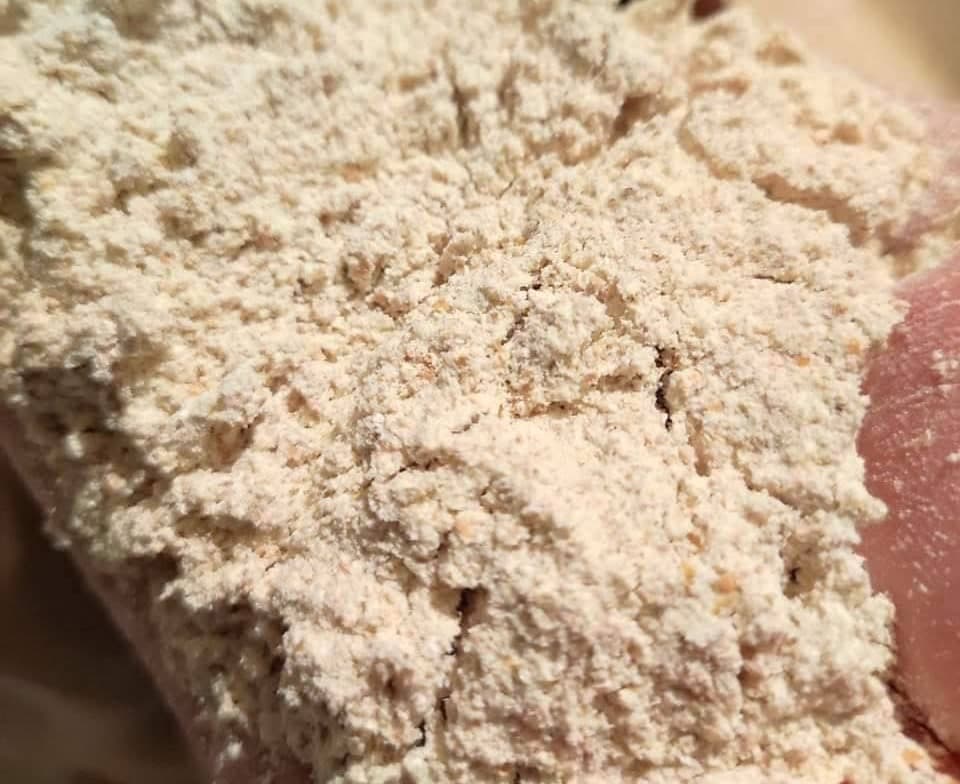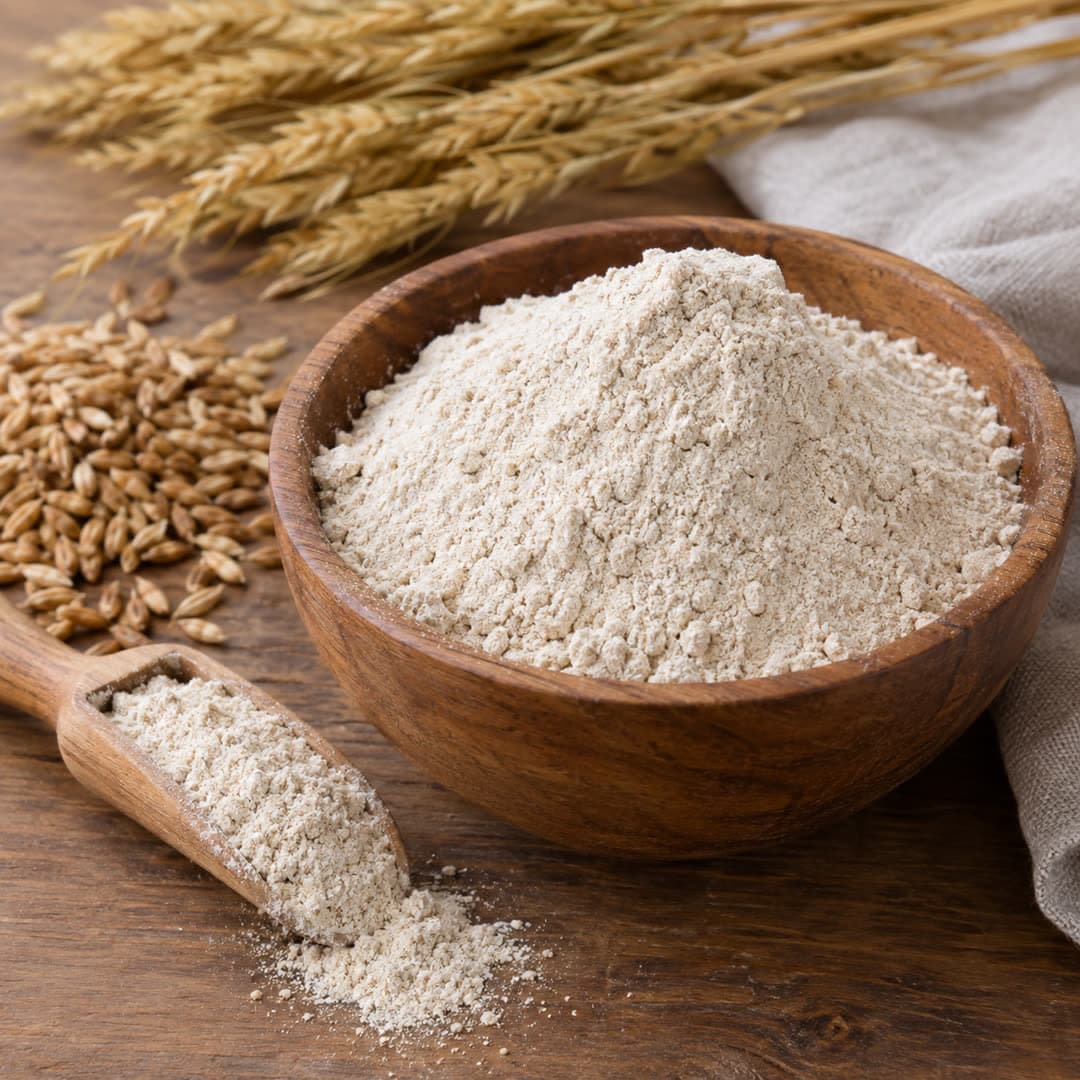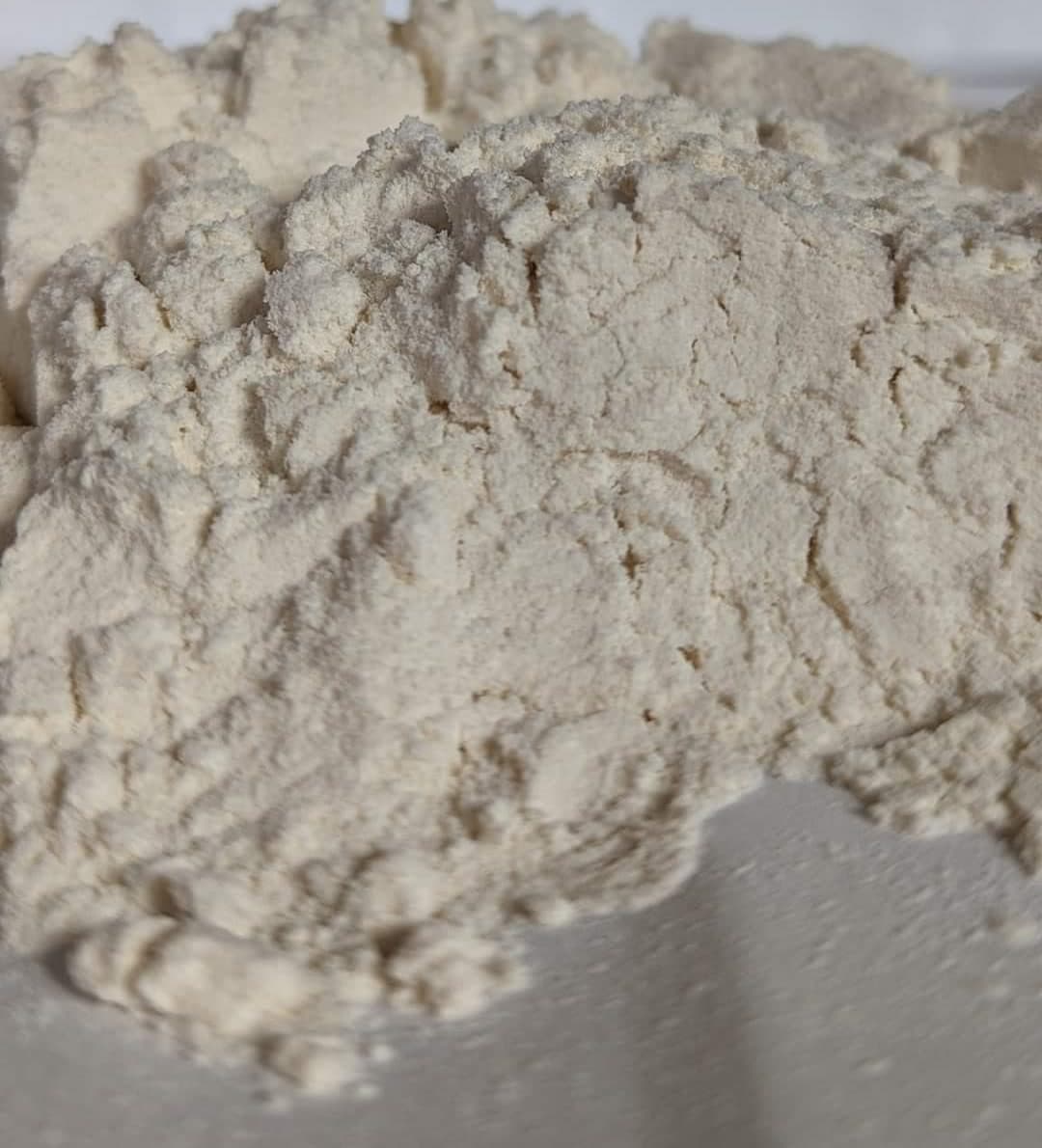
Whole-grain flour: how it differs from ordinary flour
Whole-grain flour is milled from the entire wheat kernel, with nothing removed. Here is what that means for the flavour of your bread, its nutritional value and the way the dough behaves — and how to move over to whole-grain without ending up with a dense, heavy loaf.
What whole-grain flour is
A wheat kernel has three parts: the bran, the germ and the endosperm. The bran is the kernel's outer protective layer and carries most of the fibre. The germ is the embryo of the future plant, rich in oils, vitamins and enzymes. The endosperm is the largest part — the store of starch and protein that feeds the germ as it sprouts.
When ordinary white flour is made, the bran and the germ are removed and only the endosperm is left. Whole-grain flour is milled from the entire kernel, all three parts included, so everything that was in the grain stays in the flour.
What white flour leaves behind
The bran and the germ are a relatively small share of the kernel's weight, but they hold a disproportionately large share of its nutritional value. Removing them makes the flour whiter, longer-keeping and more predictable in a dough — at the cost of a significant part of its fibre, minerals and vitamins.
There is also a purely practical reason the germ is taken out: it contains oils that oxidise over time. That is why white flour keeps far longer than whole-grain. Bearing that in mind when buying whole-grain flour is useful — buy less, more often.
Why choose whole-grain
Because nothing is removed, whole-grain flour keeps
- the fibre, most of which sits in the bran,
- the vitamins and minerals concentrated in the germ,
- the germ oils and the vitamin E that comes with them,
- the grain's natural, full flavour and its darker colour.
Fibre and fullness
The most practical advantage of whole-grain flour is its fibre. It slows digestion, which is why whole-grain bread keeps you full longer than the same quantity of white bread. General healthy-eating advice consistently places whole grains among the foods worth eating more of — in place of products made from white flour.
This is general dietary reasoning, of course, not medical advice. If you have specific restrictions or health concerns, any change is best discussed with a professional.
What changes when you bake
Two things change when you work with whole-grain flour: the amount of water and the amount of time. Bran particles absorb water more slowly, but in greater quantity, than the endosperm — so a dough made to the same recipe feels right at first and dry twenty minutes later. The fix is simple: add a little more liquid and give the dough time to rest after mixing.
The second change is structure. Sharp bran particles physically cut through the gluten network, so whole-grain dough holds gas less well and the loaf comes out with a denser crumb. The most effective answer to that is not a stronger knead but a longer, calmer fermentation and careful shaping.
Blends — the simplest way in
If you are just starting, do not try to jump straight to 100% whole-grain. The most reliable route is a gradual blend:
- 25% whole-grain + 75% premium grade — colour and flavour are noticeable, structure barely changes,
- 50/50 — the most balanced option for everyday bread,
- 75% whole-grain — already calls for more attentive handling of the dough,
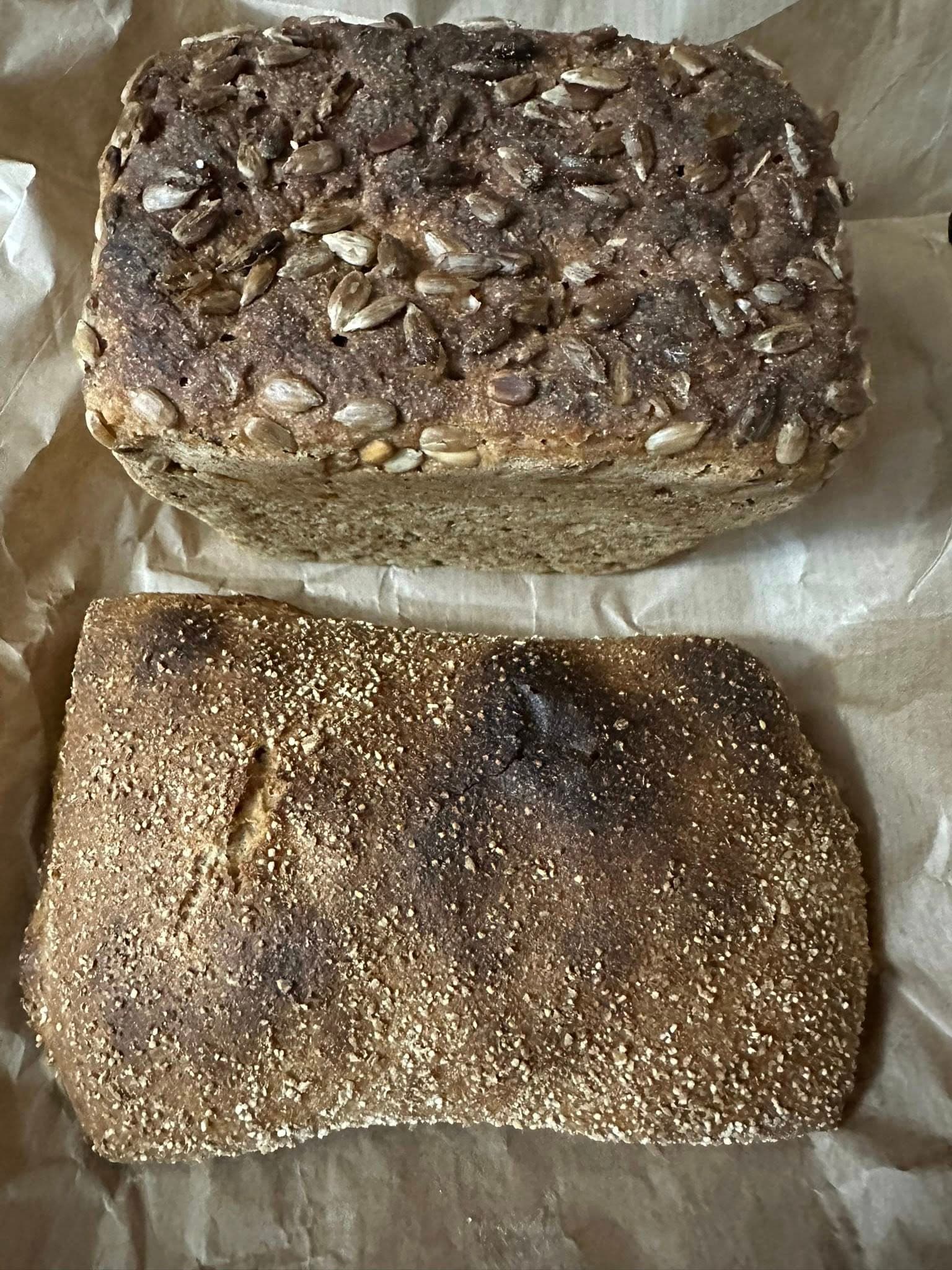
- 100% whole-grain — full flavour and a dense crumb: best in a tin.
Common mistakes
The first mistake is a dry dough. Beginners often add flour because whole-grain dough feels stickier at first. The result is dry bread that stales quickly. Oiling your hands lightly is a better answer than adding flour.
The second mistake is rushing. Whole-grain dough needs more time for both the first and the second rise. The third is an oven that is too hot with no steam, which sets the crust before the loaf has had a chance to rise. Steam in the oven for the first 10-15 minutes solves that.
How to store whole-grain flour
Because of the germ oils, whole-grain flour is more sensitive to heat and light than white flour. Keep it somewhere cool, dry and dark in an airtight container, and in the fridge in warm months. Let it come up to room temperature before using it: cold flour slows fermentation down.
The simplest check is the smell. Fresh whole-grain flour smells of grain and nuts; a bitter or paint-like smell means the oils have oxidised. For the specific shelf life, follow what the packaging states.
Whole-grain flour in sourdough
Sourdough and whole-grain flour suit each other. The bran and germ bring enzymes and natural microorganisms that a starter feeds on, so a starter is usually more active on whole-grain flour than on white. Many bakers feed their starter whole-grain flour for exactly that reason, even when the bread itself is white.
The long fermentation is not only a matter of flavour here. Whole-grain flour's slow water absorption means the dough needs time, and a long sourdough fermentation is exactly what gives it that time. The result is a more open crumb than a fast yeasted version, and a more complex flavour.
Whole-grain flour and gluten
A frequent question: is whole-grain flour somehow lighter on gluten? No. Whole-grain flour is ordinary wheat flour, simply milled from the entire kernel, and it contains gluten. It is not suitable for coeliac disease or a wheat allergy.
What does change is the speed of digestion: the fibre slows the whole process down. But that is a dietary characteristic rather than a therapeutic property, and it is no substitute for professional advice.
Beyond bread
Whole-grain flour is not limited to bread, though the rest of your baking will want a slightly different approach. In pancake and crêpe batter it works almost without adjustment: just let the batter stand for 15-20 minutes so the bran can absorb the water, and it will smooth out.
In biscuits and shortcrust pastry, whole-grain flour gives a crumblier, sandier texture and a nutty flavour that works particularly well with chocolate, honey and dried fruit. For sponges and light cakes it is better to stop at 30-50%: the weight of whole-grain flour works against the rise.
It also does well as a thickener for soups and sauces, and in a coating, where it gives a darker, fuller crust.
Which flour to start with
If you want maximum nutritional value, take whole-grain flour and start with a 50/50 blend with premium-grade. If you want something in between — a fuller flavour but a lighter crumb — look at second-grade flour. And if you are after a distinctive flavour, try replacing part of the flour with emmer flour.
The colour and flavour of whole-grain flour
The colour of whole-grain flour is not always the same, and that is normal. The shade depends on the wheat variety, the harvest year and how finely it is milled: flour from the same producer can be a little lighter or a little darker with no change in quality whatsoever.
On flavour, the remark that comes up most often is a slight bitterness. It comes from the bran and gets stronger if the flour has been stored warm for a long time. In fresh flour that note is mild and pleasant, and it disappears entirely over a long fermentation — one more reason to give whole-grain bread time.